


1. Origins of the Code Zero sail
The Code Zero was born From Racing Innovation
The Code zero (also written code 0) sails originate in a rating rule workaround where a clever designer figured they could build a very flat, high-efficiency reaching sail that could still qualify as a spinnaker under rating rules—provided it met the minimum 75% mid-girth requirement of IMS, and later ORC/IRC.
This creation delivered genoa-like lift while being rated as a spinnaker, giving racers a significant advantage in light and marginal reaching conditions.
The result was a wave of new light to medium air sails under multiple denominations (Code 0, Code 1, Code 2, screechers, reachers)—some driven in part by actual sailor needs… and in part by imaginative marketing.
Designed to deliver power when a genoa becomes ineffective and an asymmetric spinnaker cannot yet fill properly, Code sails cover a very wide range of AWA, from “almost-a-closed-haul-genoa” to “almost-a-running-asymmetric” sail.
Hence the Code Zero sail has quickly become an essential upgrade for any boat seeking better light to medium air performance, smoother handling, under apparent wind reaching angles.
In this note we will try to clarify the needs of cruisers and casual racers when it comes to Code Zero sails, the 3 Code Zero sails developed by iSails / iSpinnakers, and explain what Code Zero types, cloth, and furling options are available to meet those needs.
2. What is a Code Zero sail?
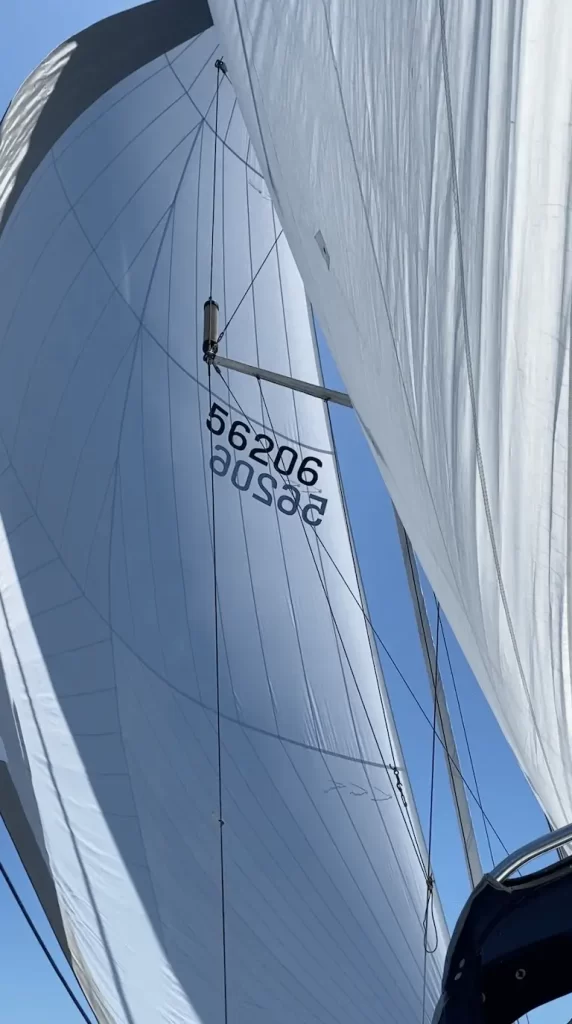
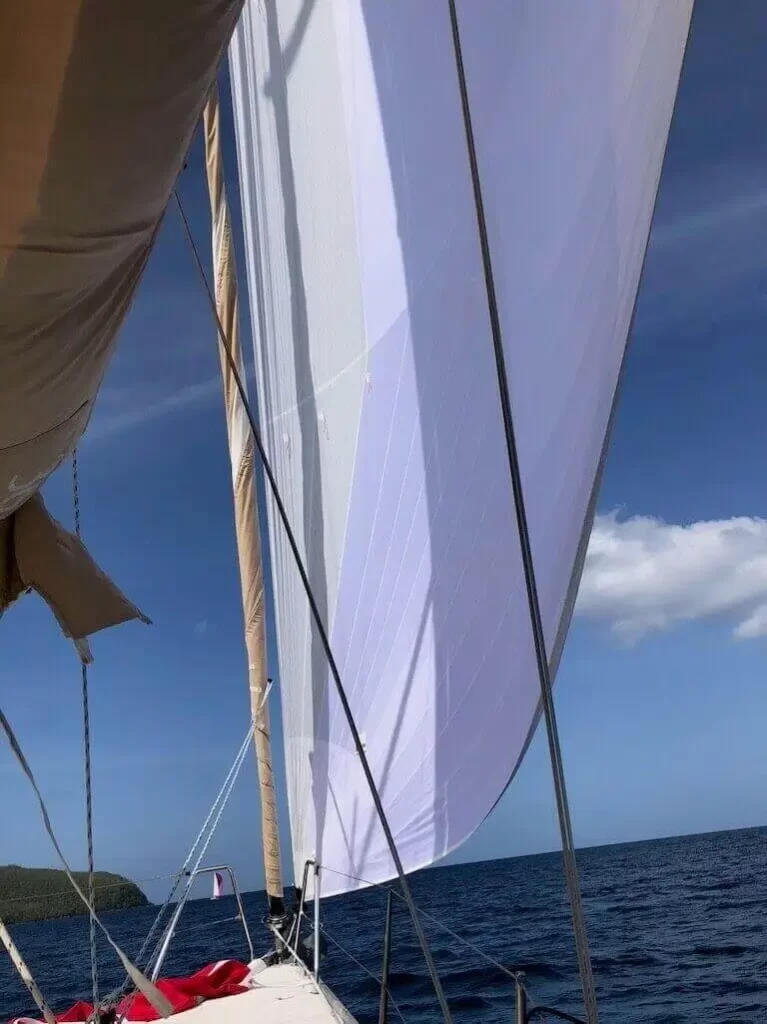
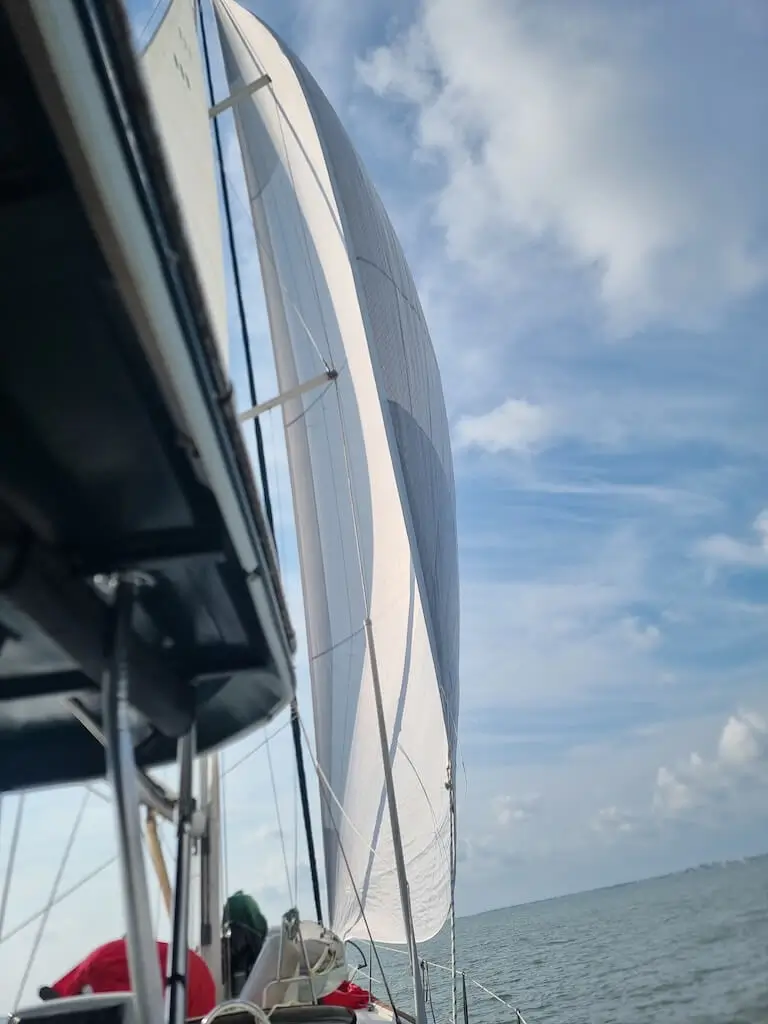
A Code Zero is a flatter sail designed to deliver power when a genoa becomes ineffective and an asymmetric spinnaker cannot yet fill properly,
A Code Zero fills the critical performance gap between:
- Jib/Genoa –which rapidly loses power as you bear away
- Asymmetric Spinnaker –which cannot develop stable power at tighter angles
A modern Code Zero is best described as a light to medium air reaching engine, optimized for:
- Apparent Wind Angles (AWA): ~40°–130° (depending on design)
- True Wind Speeds: ~5–15 knots
- Any time you want clean, efficient drive without launching a spinnaker
For many boats—monohull and multihull alike—the Code Zero has become one of the most-used sails onboard. Whether you’re looking to win in marginal conditions or enjoy effortless light to medium air cruising, a well-designed Code Zero can redefine your sailing experience.
3. What are the advantages of the Code Zero, or why sailors love Code Zeros?
3.1 For Cruising: Smart, Effortless Power
Cruisers consistently describe the Code Zero as the most useful sail on the boat. This specially true of our Crusing Code Zero.
Benefits include:
- Furl and unfurl from the cockpit
- Excellent performance in light to moderate winds
- Ideal for shorthanded sailing
- Reduces engine hours significantly
- Works across a massive wind-angle range
3.2 For Racing: A Clear Competitive Edge
- Dominates in sub-10-knot wind
- Generates stable drive across wide AWA ranges
- Ideal for tight reaching where A-sails collapse
- Quick to deploy and recover during maneuvers
A Code Zero often means the difference between ghosting along and sailing at full target speed.
4. How is a Code Zero engineered?
4.1 Aerodynamic Shape & Luff Design
Every Code Zero combines three key design characteristics:
- Low camber (flat profile): creates efficient forward drive
- High luff loads: typically, through an anti-torsion cable or structural luff
- Shorter foot length: compared with asymmetric spinnakers
4.2 Code Zero Types by Apparent Wind Angle (AWA)
Mid-girth is the defining measurement for Code Zero. Their classification is determined by mid-girth, measured at half the luff length:
At iSails / iSpinnakers, we like to group code 0 into 4 types:
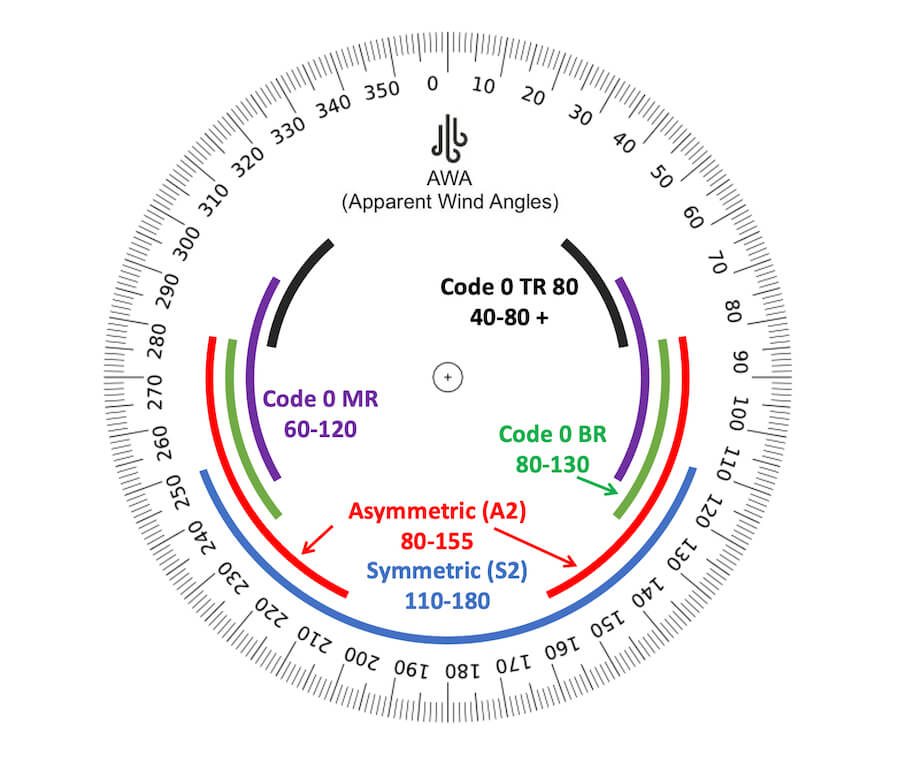
1. Flat Code 0 — “Close Reacher” (Code 0 TR in iSpinnakers range)
AWA 40°–80°+
For monohulls or multis with non-overlapping jibs/genoas or self-tacking jibs.
Designed to power the boat the moment you crack off from close-hauled.
- Mid-girth: 55–75%
- Very flat draft
- The ultimate light-air performance booster
2. Medium Code 0 — “All purpose Reacher / Screecher” (MR in iSpinnakers range)
AWA 60°–120°+
The most versatile Code Zero style—ideal for cruisers and club racers.
- Mid-girth: 70–85%
- Medium draft for broad usability
- A true workhorse for general reaching
3. Cruising Code Zéro Croisière
AWA 60°–140°+
This Cruising Code Zéro (also called Code D in Europe) is perfect for cruisers; it is made in spinnaker cloth, hence is more affordable.
- Mid-girth : 65–70 %
- Closest to an asym while keeping a straight for a classic bottom up furl (Seldén CX)
This category can be split into 2 sub groups:
4. Deep Code 0 — “Broad Reacher” (BR in iSpinnakers range)
AWA 80°–130°
Excellent for high-performance boats and fast multihulls that naturally generate forward apparent wind.
- Mid-girth: 75–90%
- More spinnaker-like shape
- Still designed for reliable furling
To summarize:
| Type | Gamme iSpinnakers | AWA Range | Mid Girth | Ideal conditions | Main |
| Flat / Close Reacher | TR | 40–80°+ | 55–75% | Close-hauled in light winds | Replaces the power of the genoa when sailing downwind |
| Medium / Versatile | MR & Cruising | 60–120° / 60–140° | 70–85% | Reaching | The most versatile |
| Deep / Broad Reacher | BR | 80–130° | 75–90% | Fast multi-hulls and deep reaching | Power close to a spinnaker, more maneuverability |
5. What are the cloth and construction of a Code Zero?
Modern sail cloth: Engineered for Stability
Code Zeros have much higher luff laod than spinnakers. While nylon remains an option in some specific cases (cruins code o in particlaur) laminate cloth offer the best option.
Racing-Grade cloth
Maximum efficiency, minimum stretch:
- Carbon fiber membrane or laminate
- Aramid (Kevlar/Twaron) laminates
- UHMWPE composites (Dyneema/Spectra)
- One-piece molded membranes (e.g., 3Di, Stratis, Delta)
Cruising Optimized cloth
Engineered for durability and excellent furling:
- Polyester-based laminated cloths (most common)
- Dimension-Polyant PX Code / CZ laminates
- Contender CZ laminates
- Challenge Code Zero laminates
- HydraNet® radial (maximum durability)
For a Cruising Code zero, Spinnaker nylon cloth is a great option and works for budget conscious cruisers.
- Contender Nylite or Maxilite
- Challenge NFS 44 or 64
Result: A sail that holds its shape under enormous load, furls cleanly, and delivers highly efficient aerodynamic performance.
6. Code Zero + Furling systems, reliable handling at any time
Most Code Zero installs use:
- A anti-torsion (anti-twist) cable OR a structural luff
- Bottom-up furling for flat Code 0s
- Top-down furling for deeper Code 0s
Seldén CX Example (iSpinnakers is a Seldén distributor)
Seldén’s CX furlers are popular because they:
- Manage extremely high luff loads
- Work with cable or structural luff designs
- Provide reliable furling from the cockpit
- Use sealed, low-friction bearings for smooth operation
UV Protection
A UV strip allows your Code Zero to remain furled temporarily, but:
- It should not be left hoisted in strong wind or unattended
- Its large frontal profile can cause flogging if accidentally unfurled
7. Common misconceptions about Code Zeros, clarified
Is a Code Zero a gennaker? What is the difference between a Code Zero and a gennaker.?
No, a Code Zero is not a gennaker. Code 0s are engineered flatter and built for higher luff tension and tighter angles.
Is a Code Zero too specialized for cruising?
No, cruisers often use a Code Zero.
Is a Code Zero expensive?
Not necessarily. Modern laminate options offer excellent value and durability.
Do Code Zeros only work in light air?
No. Properly built Code 0s handle moderate winds—your boat’s stability becomes the limiting factor before the sail does.
Conclusion: a game changing sail for any sail inventory
A modern Code Zero is one of the most transformative upgrades you can make to your sail inventory. It delivers:
- Exceptional light-air performance
- Reliable, simple furling
- Broad wind-angle versatility
- Reduced reliance on the engine
- A perfect bridge between jibs and downwind sails
Whether you’re seeking race-winning power or effortless cruising performance, a well-designed Code Zero brings your boat to life in conditions where performance is hardest to achieve.
It is, quite simply, the most effective way to unlock your boat’s true potential in light and moderate wind.